INSIGHT ADVISORY

Experience

Selected Leadership Experience

Before founding INSIGHT ADVISORY, Tural Mammadov originated and led the implementation of a number of national and international initiatives in cybersecurity, digital resilience, cyber diplomacy and capability development.

A selection of publicly available initiatives associated with the founder’s previous professional work is presented below.

01

Azerbaijan Government CERT (CERT.GOV.AZ)

Role: Founder & first head

Purpose

Establishing a national-level mechanism for cyber-incident response and coordination in Azerbaijan, protecting government information systems against cyber threats, and strengthening national cyber-defence capacity. The creation of the Government CERT was intended to support the detection, analysis and rapid response to cyber incidents; monitoring of cyber threats; early warning; exchange of security information among government institutions; and the development of cooperation mechanisms with international CERT/CSIRT networks.

02

“Cyber Diplomacy Azerbaijan” / Cyber Diplomacy Twinning Center

Role: Idea author, project lead & Coordinator of the Cyber Diplomacy Twinning Center

Purpose

Strengthening Azerbaijan’s international position in cyber diplomacy, expanding interstate cooperation, promoting principles of responsible state behaviour in cyberspace, and developing national institutional capacity. As part of the initiative, the International Conference on Cyber Diplomacy was organized in 2024 for the first time in the region, with participation from more than 30 countries, and the “Baku Declaration” was adopted to promote international cooperation, trust and security in cyberspace. The Cyber Diplomacy Twinning Center, established on the basis of Azerbaijan–Romania cooperation, supports specialist training, exchange of experience and the development of joint international initiatives.

03

Cyber Polygon Project

Role: Idea author & Co-Director

Purpose

The project, established through a grant awarded under NATO’s Science for Peace and Security (SPS) Programme, is intended to strengthen the cybersecurity of critical energy infrastructure; model realistic cyberattack scenarios across information technology and operational technology (IT/OT) environments; simulate cyberattacks in virtual environments created from digital twins of real systems; conduct security and resilience testing; and improve specialists’ practical readiness to detect, analyse and respond rapidly to cyber incidents.

04

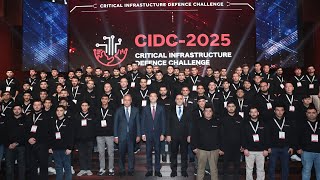
Cyber Warfare Concept for Critical Infrastructure Defence / CIDC

Role: Idea author & project lead

Purpose

Introducing, for the first time in Azerbaijan, a virtual cyber-warfare concept focused on the defence of critical information infrastructure, and strengthening the cyber-defence capabilities of the public and private sectors, rapid incident response, and inter-team coordination through the simulation of realistic cyberattack and crisis scenarios.

Results

In 2023, the first virtual cyber-warfare competition in the country was organized within the inaugural Critical Infrastructure Defence Challenge (CIDC). In 2025, the concept was further developed into a “Cyber Warfare in Smart Cities” format and evolved into a large-scale cybersecurity festival with the participation of international teams. The project supports practical workforce development, public–private sector cooperation, demonstration of innovative cyber-defence technologies, and the strengthening of national cyber resilience.

05

WUF13 – Smart-City Cyber Resilience Project

Role: Idea author & project lead

Purpose

The project, presented within the 13th Session of the United Nations World Urban Forum (WUF13), was intended to demonstrate the potential impact of cyberattacks targeting the digital infrastructure of smart cities, assess the resilience of urban services to cyber threats, and promote cybersecurity as an integral component of sustainable urban development.

Using a virtual model of Baku, the project was designed to simulate cyberattack scenarios against smart-city infrastructure, including transport, energy, communications, residential building management systems and other critical services; visualise their potential effects on urban life and public safety; and demonstrate proactive approaches to detecting and managing cyber threats.

06

Sovereign Government Digital Services & National Digital Resilience

Purpose

The project is intended to ensure the continuity of government information systems and critical digital services in the event of global internet disruptions, interruptions to international communications channels, and risks arising from external technological dependencies, while strengthening the country’s digital sovereignty and national digital resilience.

The project envisages improving domestic data exchange and network-routing mechanisms; strengthening the resilience of national DNS infrastructure; storing and processing critical government data within the country; establishing government digital services that can operate independently of external internet connectivity; and ensuring secure and uninterrupted data exchange between government information systems during emergencies.

07

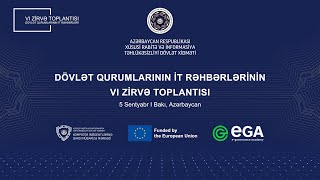
CISO Summit for Government Organizations

Role: Idea author & project lead

Purpose

Bringing together senior information security leaders (CISOs) from government institutions on a common platform to strengthen cybersecurity governance across the public sector, enhance inter-institutional coordination and exchange of experience, and jointly discuss current cyber threats and strategic security challenges. The initiative supports the development of consistent information security approaches, adoption of leading international practices, and stronger cyber resilience across government information infrastructure.

08

Information Security Risk Management

Role: Idea author & project lead

Purpose

Establishing mechanisms for identifying, assessing, prioritizing and managing information security risks across government institutions on the basis of a unified methodology. The project covers systematic risk analysis for information systems and critical assets, assessment of the potential impact of threats and vulnerabilities, planning and oversight of risk-reduction measures, and the implementation of risk-based decision-making and continuous monitoring mechanisms. The primary objective is to improve the security and resilience of government information infrastructure and ensure that cybersecurity resources are managed efficiently in proportion to the significance of identified risks.

09

Malware Analysis & Digital Forensics Laboratory

Role: Idea author & project lead

Purpose

The laboratory brings together training, practical readiness, research and operational capabilities in cybersecurity. Its primary purpose is to develop highly qualified experts in malware analysis, reverse engineering and digital forensics, investigate purpose-built malware used in APT attacks targeting Azerbaijan and government institutions, and strengthen technical support for cybercrime investigations.

10

Information Security Testing Laboratory

Role: Idea author & project lead

Purpose

The laboratory is intended to train qualified specialists in auditing and penetration testing (Pentest), develop their practical knowledge and skills, and support the practical application of established requirements for assessing the security of information systems. It also serves as a training and testing environment for identifying vulnerabilities in information systems, conducting security testing and mastering relevant methodologies.

11

First Cyber Hygiene Initiative

Role: Idea author & project lead

Purpose

Raising the level of cyber hygiene across government institutions, increasing employees’ awareness of cyber threats, and building a sustainable information security culture. The initiative included implementation of the “Cyber Hygiene” platform, engagement of civil servants in cyber-hygiene tests and training, implementation of the “Information Security Calendar” project, and the organization of the country’s first International Conference on Cyber Hygiene as part of a comprehensive awareness programme.

12

First “Bug Bounty” Programme for Government Information Infrastructure

Role: Idea author & project lead

Purpose

Introducing, for the first time in Azerbaijan and in cooperation with the “QaraBug” platform, a Bug Bounty programme covering information systems within the GOV.AZ zone; leveraging the potential of ethical hackers and independent cybersecurity researchers to encourage the identification and remediation of security vulnerabilities in government information resources; and strengthening the cyber resilience of government information infrastructure. The project also supports broader public–private sector cooperation, the development of a culture of responsible vulnerability discovery and disclosure, and the development and recognition of local cybersecurity specialists.

13

Infected IP Address Detection & Notification System

Role: Idea author & project lead

Purpose

Building a unified database of infected IP addresses associated with Azerbaijan using data obtained from multiple international cybersecurity sources, automatically detecting malware infections, and informing users about potential cyber threats. The project supports early identification of infections, promotes preventive security measures, and contributes to improving cyber hygiene across the country.

14

Malicious Internet Resource Detection & “Blacklist” System

Role: Idea author & project lead

Purpose

Identifying, classifying and consolidating malicious web resources, including dangerous sites targeting internet users in Azerbaijan, within a unified database. The project is intended to inform users about malicious resources, share detected threat indicators, and enable automated restriction of access to harmful websites by integrating the relevant lists into security systems.

15

SIM3 – Azerbaijani Localization of the Cyber Incident Management Maturity Model

Role: Initiative author & project lead for the Azerbaijani localization

Purpose

Adapting the internationally recognized SIM3 (Security Incident Management Maturity Model) into Azerbaijani and making it accessible to national cybersecurity professionals. The initiative supports the assessment of CERT/CSIRT teams’ maturity across organizational governance, human resources, technological tools and operational processes, the identification of gaps, and the promotion of development in line with international standards.

16

CVSS – Azerbaijani Localization of the Common Vulnerability Scoring System

Role: Initiative author & project lead

Purpose

Adapting the internationally used CVSS (Common Vulnerability Scoring System) model into Azerbaijani in cooperation with Japan’s JVNRSS Research Group and making it accessible to cybersecurity professionals. The initiative supports the assessment of vulnerabilities identified in information systems using a common international methodology, the determination of their criticality, the prioritization of remediation measures, and the development of risk-based cybersecurity management.

Complex challenges require informed decisions.

Speak with INSIGHT ADVISORY about your strategic, technology, AI, cybersecurity or governance priorities.